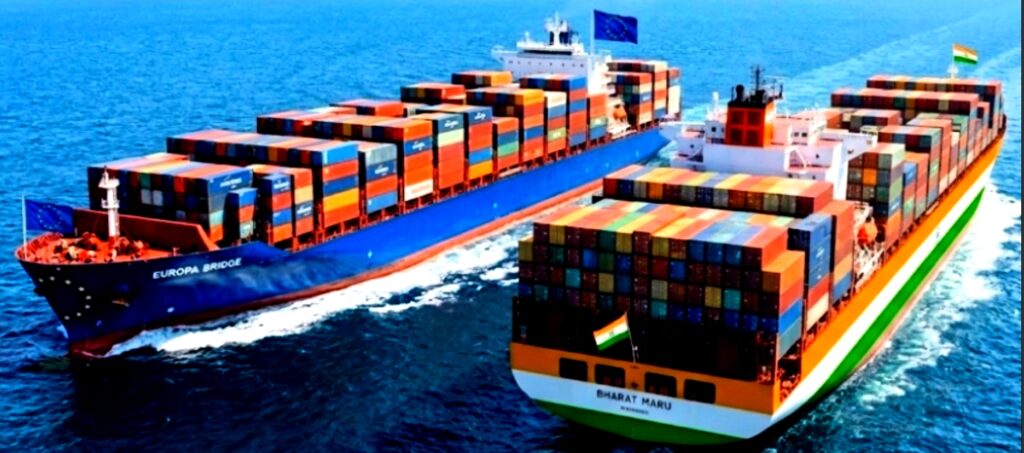
After many years of negotiations, the European Union and India have recently reached a preliminary free trade agreement aimed at facilitating trade flows, reducing tariffs, and simplifying customs procedures. The agreement covers markets that together represent around two billion consumers and encompasses goods, services, sustainability, and digital trade, with gradual implementation over an extended period.
For European businesses, the agreement provides for the immediate or phased reduction and elimination of tariffs on a large share of exports to India, particularly industrial products such as machinery, chemicals, and pharmaceuticals. Special arrangements are introduced for the automotive sector, with a significant reduction of the currently high tariffs during a transitional period and the application of quotas. At the same time, access for European companies to selected services sectors is enhanced, while simplified customs rules and stronger protection of intellectual property rights are provided.
From India’s perspective, the EU commits to abolishing tariffs on the vast majority of Indian products from the entry into force of the agreement, with further market opening at a later stage. The tariff reductions cover, among other things, products such as seafood, textiles, clothing, chemicals, base metals, and jewelry, while certain sensitive sectors, such as agriculture and automobiles, are excluded from full liberalization. For steel, specific duty-free quotas are foreseen, without special exemptions regarding the EU’s carbon pricing mechanisms.
The agreement also includes provisions for opening services markets on both sides, as well as rules on digital trade, aimed at facilitating transactions and ensuring data protection and security. Commitments on labor standards, the environment, and sustainability are also included. The next steps involve the publication of the legal texts, technical and legal scrutiny, translations, and approval procedures by the EU institutions, the European Parliament, and India, with an expected timeline of around one year.